
India has rejected any role for third parties in resolving its border dispute with Nepal, following comments from Nepal's Prime Minister suggesting involvement of China and the UK.
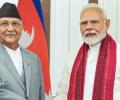
Nepal's claim on Lipulekh and Kalapani reopens a 200-year-old border dispute, while historical maps and treaties show the area belongs to India, asserts Lieutenant General Shakti Gurung (retd).

The Nepalese foreign minister was speaking to the media a day after holding wide-ranging talks with his Indian counterpart S Jaishankar that focused on ways to further expand ties in diverse sectors, including trade, critical technology, connectivity and energy.

'Our discussions focused on the India-Nepal development partnership and people-to-people ties.'

Nepal's Prime Minister Balendra Shah addressed parliament on the ongoing border dispute with India, stating both countries have agreed to seek resolution through diplomatic means and expert consultation. Shah's remarks about Nepal also encroaching on Indian territories have sparked controversy.
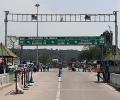
India has already termed as untenable the 'artificial enlargement' of the territorial claims by Nepal after its Parliament unanimously approved the new political map of the country featuring Lipulekh, Kalapani and Limpiyadhura areas which India maintains belongs to it.
.jpg)
Prime Minister Narendra Modi made Bhutan the destination of his first foreign visit. Now two weeks later, the foreign minister of the Himalayan kingdom, Rinzin Dorje, is in Beijing discussing the China-Bhutan border issue. The move poses a serious challenge to New Delhi because any negotiation on China-Bhutan border dispute is bound to affect India's border negotiations with China. Bhutan and China share 470 kilometres of border, which is also close to India's 'chicken's neck' -- the narrow Siliguri corridor which links the northeast.
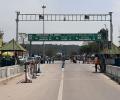
Nepal's border guarding force on Saturday released the Indian national who was detained for allegedly trying to snatch a weapon from one of their personnel during an altercation which sparked tension on the Indo-Nepal border along Bihar's Sitamarhi district, an official said.

"India is open to engaging with all its neighbours on the basis of mutual sensitivity and mutual respect, in an environment of trust and confidence. This is a continuous process and requires constructive and positive efforts," Srivastava said.
India has already termed as untenable the 'artificial enlargement' of the territorial claims by Nepal after its Parliament unanimously approved the new political map of the country featuring Lipulekh, Kalapani and Limpiyadhura areas which India maintains belongs to it.
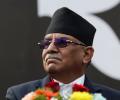
In a dramatic turn of events, Communist Party of Nepal-Maoist Centre chairman Pushpa Kamal Dahal 'Prachanda' was appointed as the new prime minister of Nepal by President Bidya Devi Bhandari on Sunday.

Prachanda took the oath of office and secrecy from President Bhandari at an official ceremony at Shital Niwas.
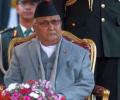
'The redrawing of the map with the inclusion of Kalapani area by Nepal and endorsement from the House of Representatives shows the KP Oli government's move to gain cheap popularity in the name of nationalism'

Though General Naravane's visit will not deal with 'impermanent' issues like the changing stands of politicians, it will certainly reinforce the deeper 'permanent' links between the people of Nepal and India. Time will hopefully tackle the present impermanence of the Sino-Nepalese romance, notes Claude Arpi.
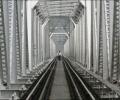
India has planned 14 strategic railway lines in areas bordering China, Pakistan and Nepal, but most of these projects are stuck for want of funds. Anusha Soni reports

Describing Bangladesh as an 'exceptional neighbour', India on Friday said Modi's 'historic' visit there from Saturday will help the two countries.

The two countries sealed 10 agreements, including the much-publicised transit trade treaty which will end Nepal's total dependency on Indian sea ports for third-country trade.

Do Modi's foreign visits actually serve India or they nothing more than expensive tools for domestic positioning and image-building, asks Shehzad Poonawalla.
